Carcinoma in Situ Implies That the Lesion Shows
This gene also has a role in the formation of some cancers and in the regulation of gene expression. BIRADS 3 often indicates the need for a 6.

Carcinoma In Situ An Overview Sciencedirect Topics
This gene encodes a member of the epidermal growth factor EGF receptor family of receptor tyrosine kinases.
. The architecture shows regular stratification without cellular atypia. Tumor extension through the muscularis mucosae into the submucosa is classified as T1 Figure 5. Peter Greaves MBChB FRCPath in Histopathology of Preclinical Toxicity Studies Fourth Edition 2012.
Diagnosis and Treatment of Non-Muscle Invasive Bladder Cancer. Fibrolamellar carcinoma FLC a rare lethal hepatic cancer occurs primarily in adolescents and young adults. Squamous metaplasia the process by which mature non-squamous epithelium is replaced by stratified squamous epithelium is a well-described phenomenon in the endocervical canal of both women and laboratory animals.
Carcinogenesis also called oncogenesis or tumorigenesis is the formation of a cancer whereby normal cells are transformed into cancer cellsThe process is characterized by changes at the cellular genetic and epigenetic levels and abnormal cell divisionCell division is a physiological process that occurs in almost all tissues and under a variety of circumstances. H19 is a gene for a long noncoding RNA found in humans and elsewhereH19 has a role in the negative regulation or limiting of body weight and cell proliferation. Unlike hepatocellular carcinoma FLC has no known association with viral metabolic.
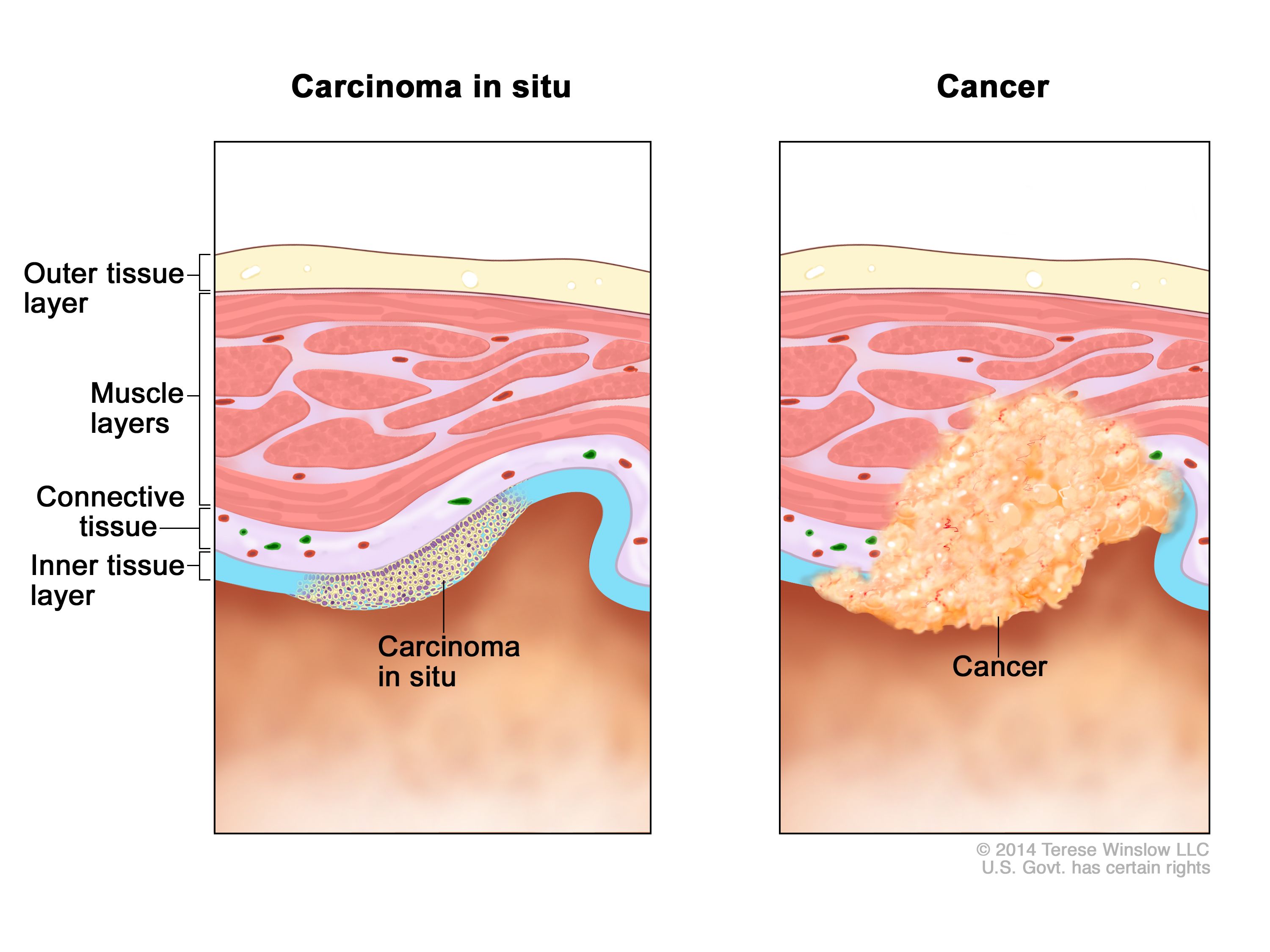
For colorectal carcinomas carcinoma in situ pTis as a staging term refers to tumors involving the lamina propria andor muscularis mucosae but not extending through it intramucosal carcinoma. The H19 gene is expressed exclusively on one parental allele in a phenomenon known as imprinting. Up to 9 of breast cancer screening mammograms receive a BI-RADS category of 3 4 or 5 which implies that there is cause for concern and further investigations will be necessary.
Epithelial changes squamous metaplasia. However it does bind tightly to other ligand-bound EGF receptor family members to form a heterodimer stabilizing ligand binding and enhancing kinase-mediated activation of. 22 Of the 243 lesions that were prospectively classified as complicated cysts including 15 clustered microcysts in the series by Daly and colleagues 22 210 864 yielded fluid at diagnosis 8 resolved or nearly resolved 32 on puncture and 7.
This protein has no ligand binding domain of its own and therefore cannot bind growth factors. 3D printing alias additive manufacturing can transform 3D virtual models created by computer-aided design CAD into physical 3D objects in a layer-by. AUASUO Guideline provides a risk-stratified clinical framework for the management of non-muscle invasive bladder cancer.
Diagnosis and use of urine markers is discussed in addition to variant histologies resection intravesical therapy BCG therapy cystectomy enhanced cystoscopy and patient follow up. One malignancy was a 3-mm ductal carcinoma in situ DCIS within a papilloma 24 and the other was a 4-mm grade II IDC NOS. BIRADS 3 is rarely used nowadays because BIRADS 4 and 5 are categories that lead to biopsies and breast biopsy to give a definitive diagnosis.
- Mild dysplasia Squamous Intraepithelial Neoplasia SIN 1 - Moderate dysplasia SIN 2 - Severe dysplasia SIN 3 - Carcinoma in situ SIN 3 The Ljubljana classification of squamous intraepithelial lesions has also been proposed see below Barnes et al 2005.

Carcinoma In Situ An Overview Sciencedirect Topics

Adenocarcinoma In Situ An Overview Sciencedirect Topics
Definition Of Carcinoma In Situ Nci Dictionary Of Cancer Terms National Cancer Institute


Comments
Post a Comment